
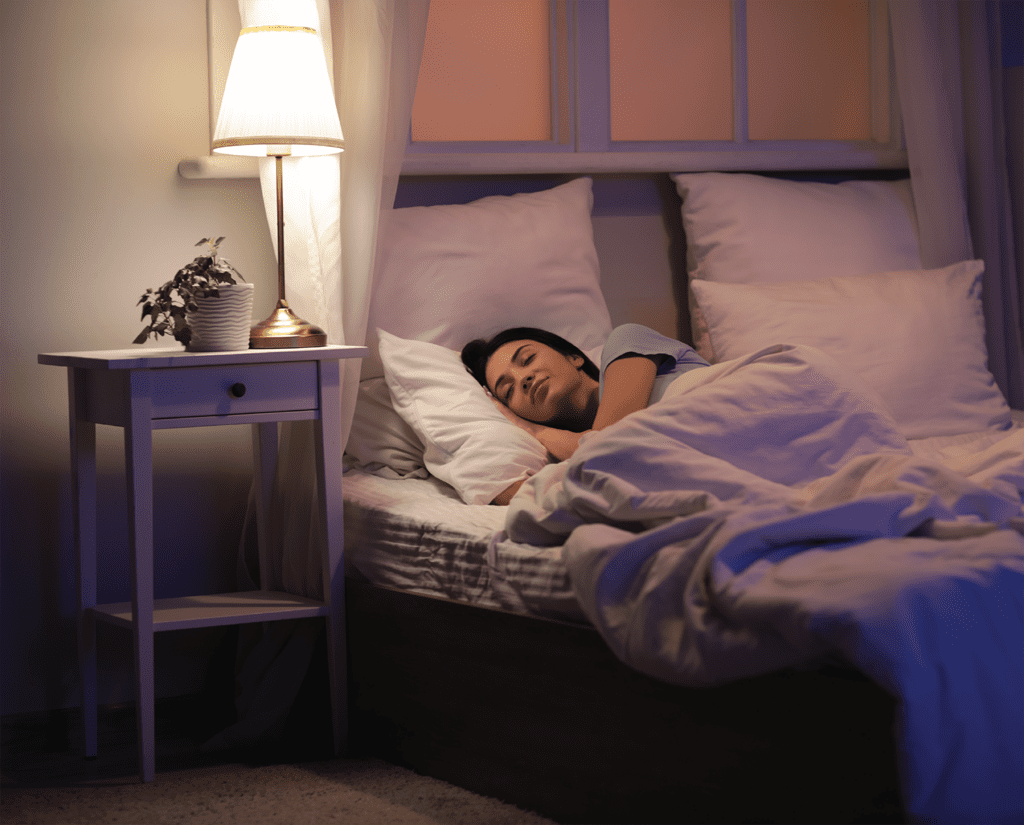
I remember the first time I woke at 3am and couldn’t get back to sleep. I lay there, heart thumping, mind already running through things that hadn’t happened yet. Too warm, then too cold. I stared at the ceiling. I checked my phone which, as I now know, was absolutely the wrong thing to do.
At the time I put it down to stress. It was only later after blood tests, a trip to the GP and many honest conversations with women going through the same thing that I connected the dots. The broken sleep wasn’t stress. It was perimenopause. And what I wish someone had told me then is this: the way you live your whole day shapes how you sleep that night. That is exactly what sleep hygiene means.
What Is Sleep Hygiene?
It is the collection of daily habits and rituals that teach your brain and body to associate rest with safety from the moment you open your eyes in the morning to the moment you close them at night.
During perimenopause and menopause, fluctuating oestrogen and progesterone disrupt your temperature regulation, suppress melatonin, and heighten anxiety. Your circadian rhythm – the internal clock governing alertness and sleep – is quietly undermined. Sleep hygiene, practised consistently, sends your nervous system a steady signal of calm. In a phase of life that can feel destabilising, that signal matters more than most people realise.
Start the Morning With Intention
Sleep hygiene begins at dawn. Natural morning light is one of the most powerful regulators of your circadian rhythm. It signals cortisol to rise at the right time, which in turn primes melatonin to release at the right time that evening. Even ten minutes outdoors with your cup of tea can meaningfully improve what happens when you lay your head down at night.
Move Gently, Eat Wisely
Consistent moderate movement such as brisk walking, yoga, Pilates, and light strength work two or three times a week, supports deeper sleep cycles and stabilises mood.
What you eat matters just as much. If you wake regularly between 2am and 4am, blood sugar instability may be driving it. When glucose drops too low overnight, the body releases adrenaline and cortisol and you wake suddenly, heart racing. The simple plate strategy by Jessie Inchauspé which I have adopted is: vegetables first, then protein, then carbohydrates. Among other things this flattens glucose spikes and reduces overnight crashes. I always include protein with dinner, reduce late-night sugar, and rarely drink alcohol, which fragments sleep in ways most of us don’t appreciate until we stop. Along with good nutrition, a well-formulated daily supplement such as Promensil’s Perimenopause 10-in-1. plays a role in sleep quality and nervous system regulation.
Build an Evening Ritual
Temperature regulation is one of the things menopause disrupts most which is exactly why a warm bath 60–90 minutes before bed is so effective. It raises your core temperature, and when you step out, the natural cooling drop that follows acts as a biological trigger for sleep. I add mineral-rich Epsom or Dead Sea salts to mine, to support muscle relaxation and essential oils designed to calm the mental restlessness that so many of us experience during hormonal transition. It was my own bath ritual that inspired our bath range at Healing Alternatives, specially formulated to make this part of the evening genuinely restorative.
After your bath, protect the 30 minutes before bed. Dim the lights, step away from screens, and let the evening slow. As cortisol does not fall instantly.
Finally, before sleep, write down three things you are grateful for. I was sceptical at first. But gratitude genuinely shifts brain chemistry reducing rumination and stress hormones, and closing the emotional loops that keep the mind awake. Small things count as gratitudes: morning light, a warm bath, a conversation that made you laugh.
Menopause is one of the most challenging transitions I have been through but also one of the most clarifying. Sleep hygiene won’t fix everything overnight, but these habits, layered consistently, create a foundation that carries you through. Because deep sleep during this phase of life supports mood, metabolism, cognitive clarity, and long-term health.
Veronica Morris is the co-founder of Healing Alternatives, a natural wellness brand whose Menopause range has earned MTick certification from GenM, independently recognising 15 products as menopause-friendly across the 48 known signs of menopause. Veronica brings invaluable lived experience to the development of Healing Alternatives’ menopause products. She truly understands the journey, because she has been there too.